The Mark Balma Project
From the earliest days of Christianity, sacred art has helped believers encounter the mystery of God. Before many could read Scripture, they learned the faith through images painted on chapel walls, mosaics glowing in candlelight, and frescoes that lifted the eyes and hearts of the faithful toward heaven. Sacred art has always been more than decoration. It is prayer made visible. It teaches, it inspires and invites us into contemplation of divine realities that transcend words.
At Our Lady of Grace, we are blessed with a beautiful church that has continued to grow and evolve over the years. Many of the features that now shape our sanctuary were added thoughtfully over time, each contributing to the beauty and reverence of our worship space. Today, our parish stands at the beginning of a remarkable new chapter.
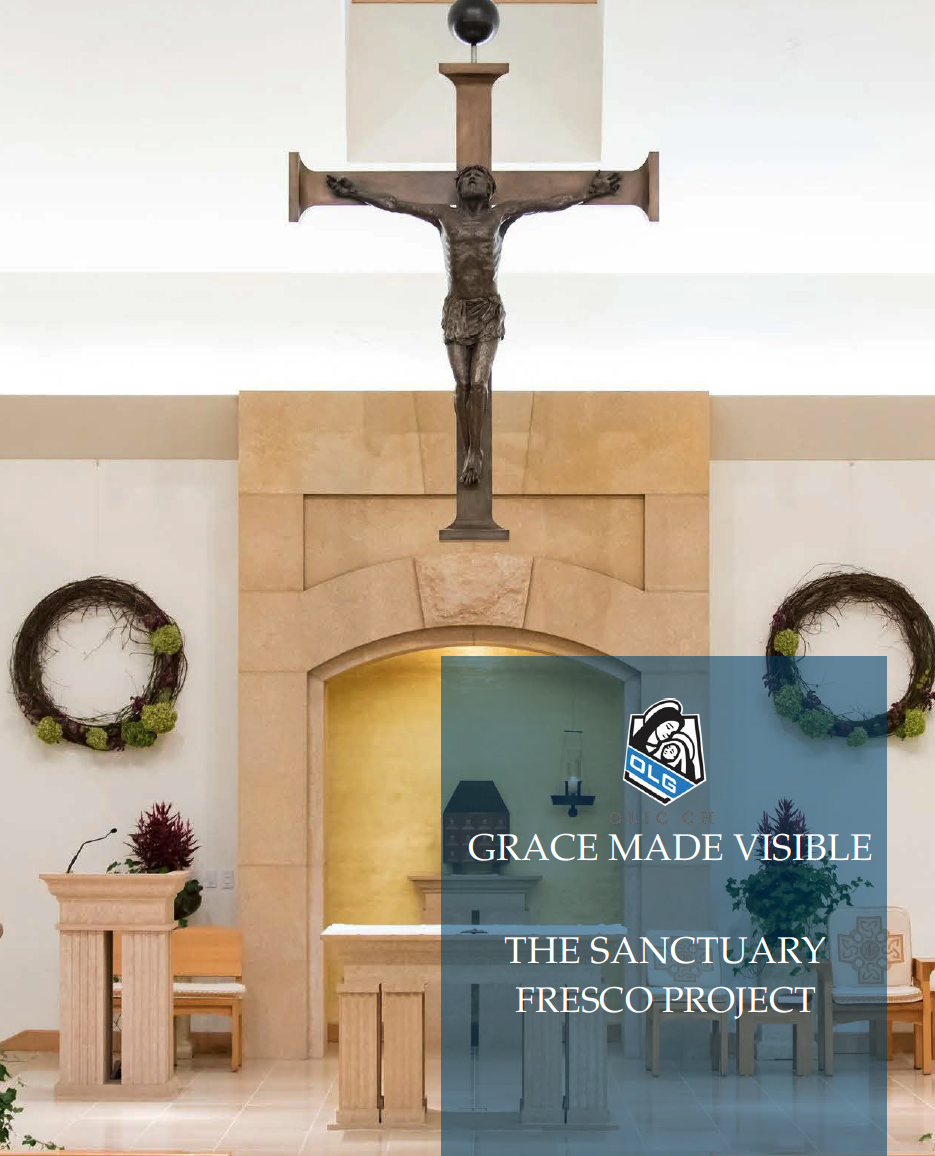
OLG has been given the extraordinary opportunity to welcome internationally acclaimed fresco artist Mark Balma to create two original, site-specific frescoes in our sanctuary from June 2026 to November 2026.
The frescoes center on two profound moments in the life of the Blessed Virgin Mary.
Sacred Art in the Sanctuary Proposal
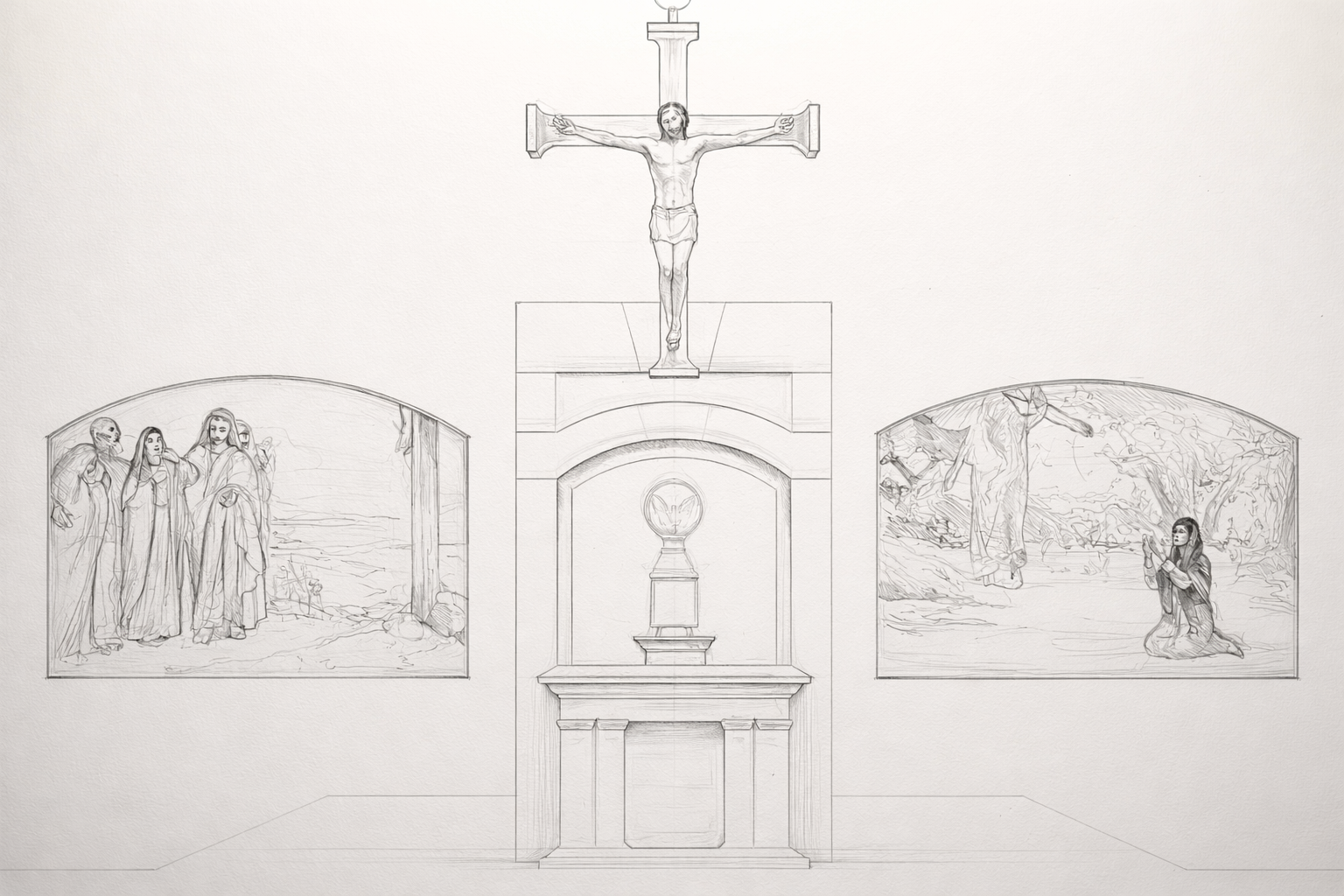
OLG was given the opportunity to consider a truly exciting artistic proposal to have internationally acclaimed fresco artist Mark Balma to come to OLG to create two site-specific frescoes in our sanctuary. These frescoes would be designed uniquely for our space, shaped by the prayer and character of our community. The proposed scenes are rooted in the life of Our Lady, our mother and patroness:
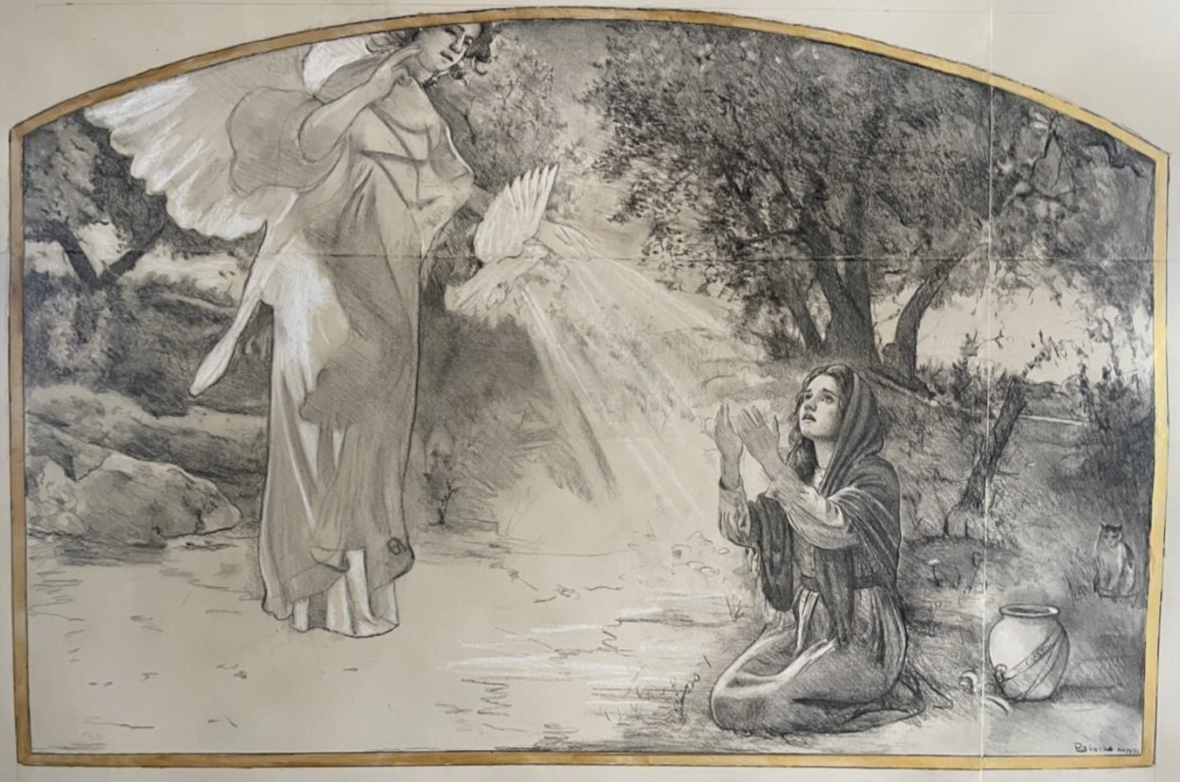
The Annunciation – the moment Mary receives the message of the angel and offers her courageous “yes” to God. In that instant, through her trust and surrender, the Word became flesh. This scene captures the beginning of salvation history unfolding through the humility and faith of Our Lady.
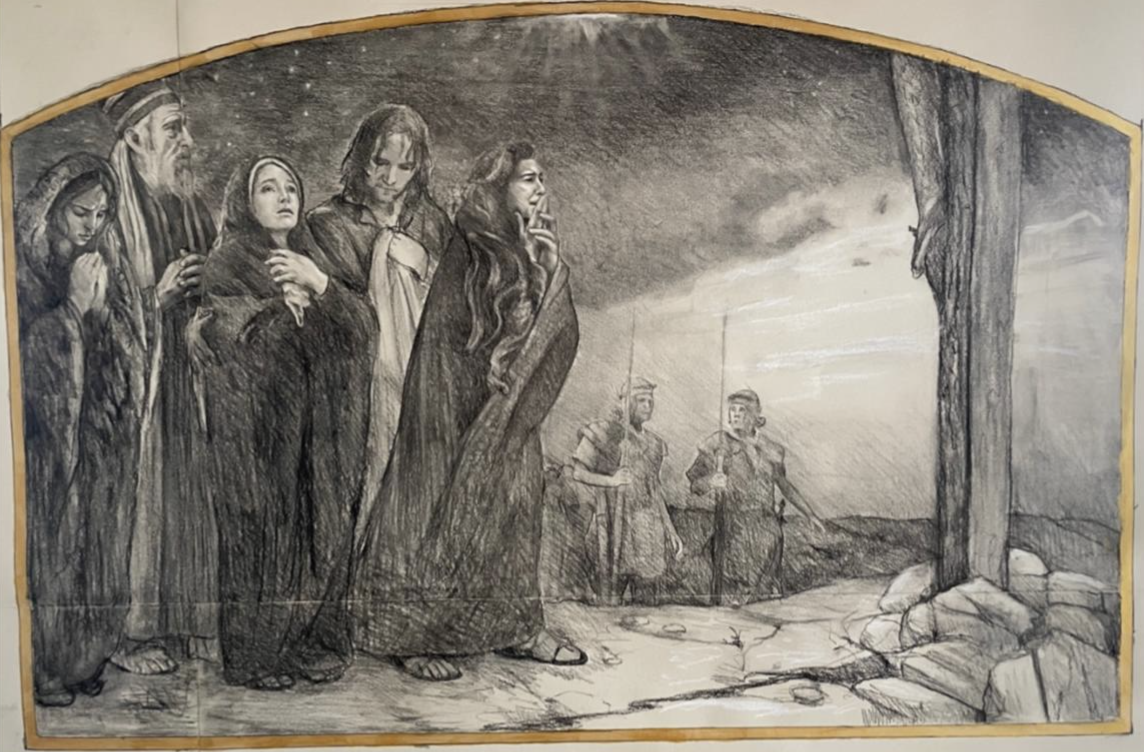
Mary at the Foot of the Cross – the moment Mary stands faithfully beside her suffering Son. Here we encounter her strength, sorrow, fidelity, and motherhood. At the Cross, Mary is united not only to Christ’s suffering, but also to the suffering of the entire human family.
Together, these two scenes form a powerful meditation on discipleship. One reveals Mary’s joyful fiat, her wholehearted yes to God’s plan. The other reveals her steadfast faithfulness in suffering. Beginning and end. Joy and sorrow. Hope and sacrifice. These images speak directly to the Christian life and beautifully reflect the identity of our parish as Our Lady of Grace.
These will become instruments of prayer. Every baptism, wedding, funeral, Mass, and holy hour celebrated within these walls would unfold beneath these sacred images. Generations of parishioners, children, visitors, and future Catholics would pray in their presence and be reminded of God’s grace made visible through Mary’s life and witness.
Who Is Mark Balma?
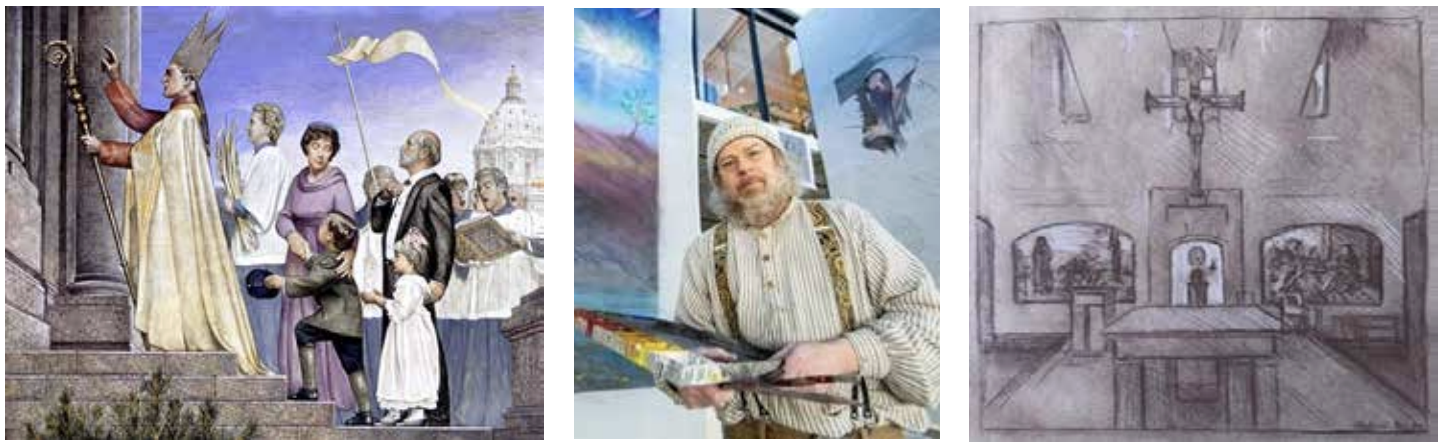
Mark Balma is one of the world’s leading fresco painters. A Minnesota native who now resides in Assisi, Balma is classical realist painter who incorporates techniques of the early Renaissance into portraits, fresco murals and studio works. He uses an early Renaissance technique of oil painting pioneered by Leonardo da Vinci, which is composed of many layers of hand-ground paint superimposed upon each other in a secret mixture of essential oils and resin. Balma is known for his large-scale sacred and civic works, including commissions at the Vatican, The Cathedral of Saint Paul, the Basilica of St. Mary, and the University of St. Thomas. Balma’s work is rooted in a theology of beauty. For him, art is not just technical skill but it is a sacred vocation. His commitment to the ancient craft of fresco, in particular, sets him apart in today’s art world and connects his work with centuries of Catholic tradition.
What Is a Fresco?
A fresco is one of the oldest and most revered forms of sacred art. The term comes from the Italian word “fresco” meaning fresh. In this technique, pigments are applied directly onto fresh plaster. As the plaster sets and dries, the paint becomes chemically fused with the wall itself making the image an enduring, physical part of the space. It is designed for one space and one purpose which is to live and breathe within the architecture of worship. Frescoes are typically created in small sections each day, timed precisely with the drying of the plaster. The process requires not only extraordinary skill but careful planning, theological reflection, and harmony with the space. The great frescoes of Christian history, Michelangelo’s Sistine Chapel ceiling, Giotto’s cycles in Assisi, and countless others—are expressions of faith, born of prayer and made to last for generations.
For more information or questions on this project please email Rámond Mitchell, Director of Liturgy.